🥩 Interactive Steak Doneness Guide
Drag the slider to see how the color, texture, temperature, and chef recommendation changes at each stage of doneness.
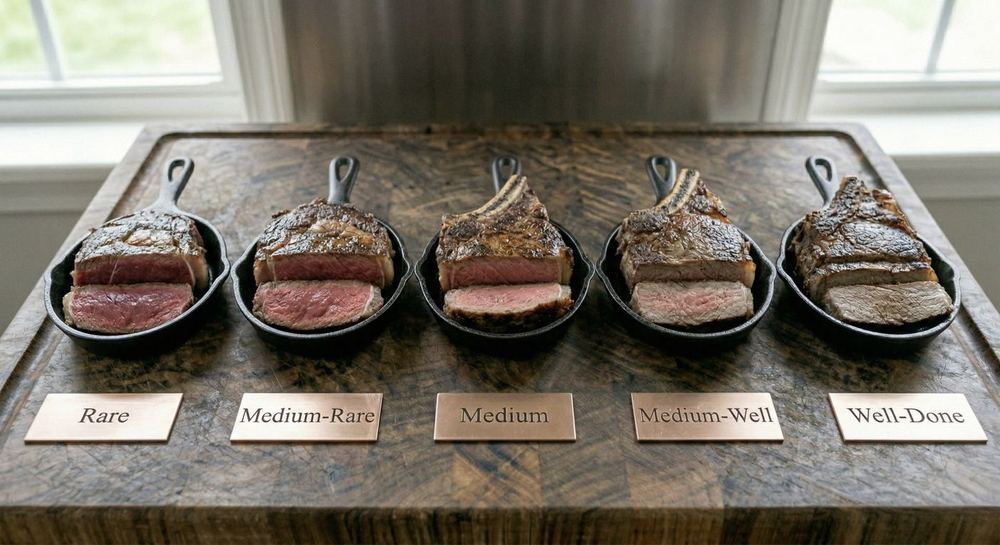
Drag the slider to see how the color, texture, temperature, and chef recommendation changes at each stage of doneness.
The color change you see as steak cooks from rare to well done is caused by two chemical processes: protein denaturation and myoglobin conversion. Myoglobin is the protein that gives raw beef its red color. As temperature rises, myoglobin converts from its oxygenated (red) form to a denatured (gray-brown) form. The temperature at which this conversion accelerates explains why the color changes happen at specific doneness levels.
The transition from medium-rare to medium is where most of the flavor character changes. Below 135°F, the fat is warm and aromatic but hasn't fully rendered. Above 140°F, the intramuscular fat has rendered and the muscle fibers have contracted enough to expel significant moisture. This is why the eating quality difference between medium-rare and medium is more pronounced than the 5-10°F temperature difference suggests.
The slider shows you what to aim for visually. In practice, use an instant-read thermometer — it's the only reliable method across different cuts, thicknesses, and cooking methods. Insert from the side into the thickest point, wait for the reading to stabilize, and pull the steak at 5°F below your target to account for carryover cooking during the rest period.