How to Roast Vegetables Perfectly
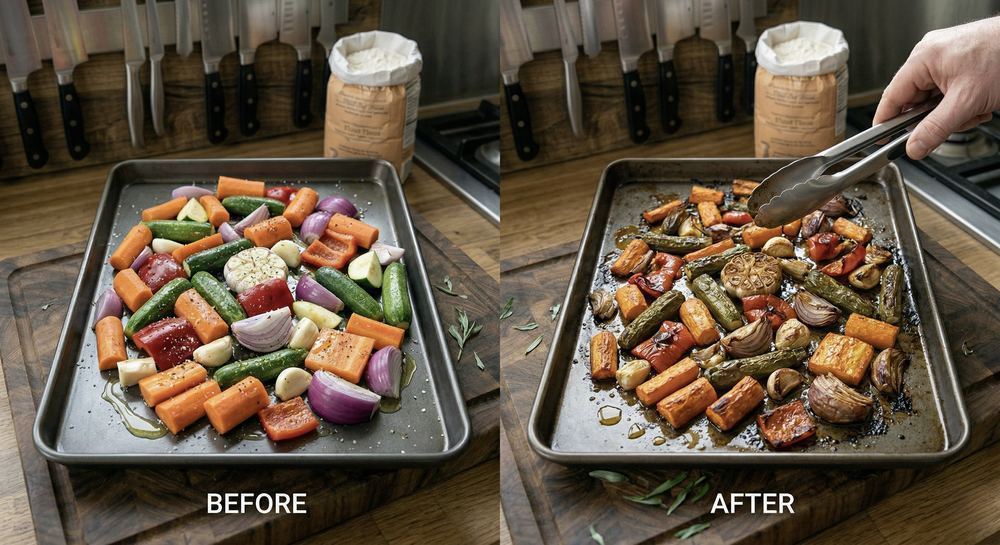
Tested in a Real Home Kitchen
Vegetable cooking is simple in theory and easy to get wrong in practice. These techniques were tested at multiple temperatures and timing combinations to find what actually produces the best result.
Soft, pale, flavorless roasted vegetables are almost always a temperature or spacing problem. Not a seasoning problem. Not a vegetable problem. You can use the best olive oil and the best seasoning in the world — if your oven is at 375°F and your pan is crowded, you're going to get steamed vegetables regardless.
This guide covers the two changes that fix 90% of roasted vegetable problems, and why those two changes work at the physical level.
Why 425°F Is Different From 375°F
Roasting works through Maillard reaction and caramelization — both of which require surface temperatures well above 280°F. At 375°F oven temperature, the vegetable surface might only reach 250–270°F before the moisture inside starts escaping as steam. That steam keeps the surface temperature at or below 212°F (the boiling point of water) until all the internal moisture has escaped. By then, the vegetable is fully cooked through but hasn't browned significantly.
At 425°F+, the surface reaches browning temperature fast enough that caramelization begins before the interior moisture has fully escaped. The result is a caramelized exterior and a tender interior — the contrast that defines properly roasted vegetables versus steamed vegetables.
Spacing matters for the same reason. Each piece of vegetable releases moisture as it cooks. Crowded pieces create a steam environment around each other that collectively suppresses surface temperature. Even at 450°F, a crowded pan of vegetables will produce steamed results because the effective surface temperature never exceeds 212°F.
Pro Tips
- Use two sheet pans rather than crowding one — crowded vegetables steam instead of roast.
- Toss vegetables in oil until glistening on all sides, not pooling in the bowl.
- Salt immediately before roasting — salting too early draws moisture and prevents browning.
- A convection setting in your oven produces significantly crispier roasted vegetables than standard bake.
- The charred tips on broccoli and cauliflower are not a mistake — they're the best part.
The Crowding Test
I roasted two identical batches of broccoli at 425°F: one on a large pan with room between pieces, one on a small pan with pieces touching. Same oven, same temperature, same time.
The spaced batch came out with charred tips, caramelized cut edges, and a slightly crispy texture. The crowded batch came out soft and pale — cooked through, but clearly steamed. The only difference was the amount of space between pieces.
This is the test I recommend to anyone who thinks their oven runs cool or their vegetables are just bad. Run this exact comparison once and the result will eliminate every excuse except pan spacing and temperature.
Step-by-Step
- 1
High Heat Is Non-Negotiable
Roasting relies on the Maillard reaction and caramelization to transform vegetables. Both require surface temperatures well above 280 degrees F. At oven temperatures below 400 degrees F, vegetables lose moisture and soften before the surface gets hot enough for browning — producing soft, pale, flavorless results. At 425-450 degrees F, the exterior caramelizes while the interior steam-cooks from its own moisture.
- 2
Dry Vegetables Completely and Give Them Space
Moisture is the enemy of roasting. Wet vegetables produce steam, and steam-cooked vegetables are not roasted vegetables. Wash and dry thoroughly, then if possible let cut vegetables sit uncovered for 10-15 minutes before roasting. Spacing is equally critical — vegetables must have room around each piece for moisture to evaporate freely. Crowded vegetables steam each other. Use two pans rather than crowd one.
- 3
Fat, Salt, and Toss Order
Coat vegetables in oil until they glisten on all surfaces — not swimming, not dry. Season with kosher salt immediately before the oven. For dense root vegetables like carrots and parsnips, season before tossing in oil. Pepper goes on before roasting for root vegetables but after for delicate vegetables like asparagus where it can burn.
- 4
Different Vegetables, Different Approaches
Dense starchy vegetables (potatoes, carrots, beets) need 30-45 minutes at 400-425 degrees F and benefit from a single flip at the halfway point. Cruciferous vegetables (broccoli, cauliflower, Brussels sprouts) excel at 425 degrees F for 18-25 minutes — charred floret tips are desirable. Delicate vegetables (asparagus, green beans) need 12-18 minutes at 425 degrees F. Mushrooms need the highest heat and the most space.
- 5
The Flip Technique and Visual Doneness Cues
For most vegetables, flip once at the halfway point to expose the other side to direct pan contact. Look for: golden-brown caramelization on cut surfaces, slight charring on thin edges or tips (this is flavor, not a mistake), and the ability to pierce the thickest part easily with a knife tip. Properly roasted vegetables should have concentrated sweetness and savory depth that raw or steamed versions lack entirely.
Common Mistakes
The most common mistakes with this technique — and why each one produces a bad result:
- Crowding the pan: This is the number one vegetable cooking mistake. Crowded vegetables release moisture that lowers the pan temperature — they steam instead of roast. Use two pans.
- Not enough heat: Vegetables need 400–450°F to caramelize properly. Lower temperatures produce soft, pale, flavorless results.
- Wet vegetables: Water on the surface of vegetables steams them instead of roasting them. Dry thoroughly after washing.
- Not cutting uniformly: Uneven pieces cook unevenly — some will be mushy before others are tender.
- Seasoning too early: Salting vegetables more than a few minutes before roasting draws out moisture and prevents browning. Season immediately before the oven.
The Fastest Fix for Pale Roasted Vegetables
Raise your oven temperature to 425°F minimum — 450°F for mushrooms and Brussels sprouts. Use two sheet pans instead of one if needed. Make sure nothing is touching anything else on the pan. Don't open the oven for the first 15 minutes. Those four changes alone will produce noticeably different results from your current approach.
The Charred Tips Are the Best Part
I used to pull broccoli and cauliflower early to avoid the charred tips. This was wrong. The charred tips have concentrated, slightly bitter flavor that balances the sweetness of the caramelized stem. The best restaurant-quality roasted broccoli has tips that look slightly overdone to most home cooks. Let them go. The flavor payoff is worth it.
Method Comparison
| Method / Type | Key Difference |
|---|---|
| 425°F standard bake | Reliable for most vegetables. Good browning without burning. |
| 450°F for mushrooms | Mushrooms need higher heat to drive off moisture before browning. |
| 400°F for dense roots | Carrots, beets, parsnips — lower heat, longer time for even cooking. |
| Convection | Faster and crispier than standard bake. Reduce temperature by 25°F. |
Step-by-Step: How to Roast Vegetables Perfectly
Pro Tip — Roast at High Heat, Never Low
The most common vegetable roasting mistake is using an oven set below 400°F. Low heat causes vegetables to steam in their own moisture instead of caramelizing. Use 400–450°F and make sure they have space. High heat + dry vegetables + room to breathe = caramelization and real flavor.
Vegetable Roasting Temperature & Time Guide
| Vegetable | Oven Temp | Time (approx) | Visual Doneness Cue |
|---|---|---|---|
| Broccoli | 425°F / 220°C | 18–22 min | Florets charred at tips, stems fork-tender |
| Asparagus | 425°F / 220°C | 10–15 min | Tips lightly browned, stalks bend but don't snap |
| Carrots (1-in) | 400°F / 205°C | 25–30 min | Golden brown, easily pierced with a fork |
| Potatoes (cubed) | 425°F / 220°C | 30–35 min | Golden crust, fluffy interior |
| Brussels sprouts | 425°F / 220°C | 20–25 min | Cut sides deeply caramelized, outer leaves crispy |
| Mushrooms | 450°F / 230°C | 15–20 min | Deeply golden, no moisture pooling in pan |
| Bell peppers | 425°F / 220°C | 25–30 min | Charred skin, collapsed and tender |
Common Mistakes to Avoid
Even experienced cooks make consistent mistakes with this technique. Understanding them upfront saves hours of trial and error:
- Wrong temperature: Cooking at the wrong heat level — usually too low when browning is the goal — is the single most common error.
- Skipping prep steps: Steps like drying the surface, salting in advance, or bringing food to room temperature are easy to skip and dramatically affect the result.
- Guessing instead of measuring: An instant-read thermometer removes all guesswork. Professional kitchens rely on thermometers, not timing, for every protein.
- Rushing the process: Most techniques have non-negotiable waiting periods — rest times, brining windows, reducing steps. Patience is a cooking skill.
Key Takeaways
- Dry vegetables thoroughly before roasting for proper caramelization
- Do not overcrowd the pan — one of the most common and impactful mistakes to avoid
- High heat (400–450°F) creates caramelization; low heat creates steam and soggy results
- Season with acidity (lemon, vinegar) just before serving to brighten all vegetable dishes