How to Cook Salmon Perfectly
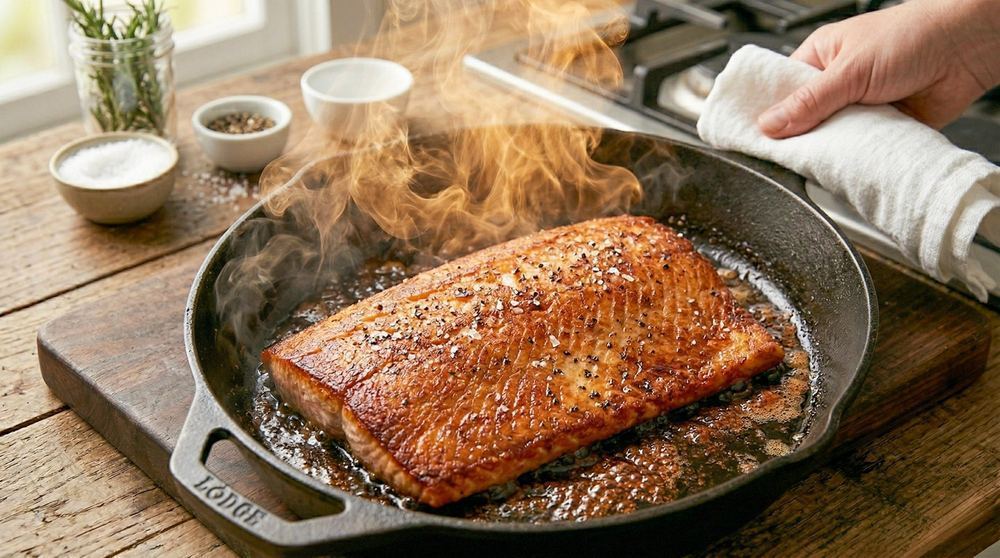
Tested in a Real Home Kitchen
Fish cooking is unforgiving — this guide reflects real tests, including the failed ones. The techniques here are the ones that consistently produced the best results in a home kitchen, not a professional one.
Overcooked salmon doesn't look overcooked until it's too late. That's the trap. The fish changes color from the outside in — the surface goes opaque long before the center is done — and most people are watching the surface, not the center. By the time the top looks right, the inside is already past its best temperature.
This guide covers how to read salmon correctly, what temperatures actually produce the best texture, and the cold-pan technique that produces consistently crispy skin.
What Actually Happens When Salmon Cooks
Salmon proteins coagulate starting at around 110°F and are fully set by 140°F. The window between silky and dry is about 15°F — and most home cooks are cooking to 145°F+ without realizing it.
At 125°F, the salmon has just started to flake. The center is still slightly translucent and has a luxurious, yielding texture. At 145°F (FDA safe), the fish is noticeably drier and firmer. Neither is wrong — but they produce a completely different eating experience, and most people don't realize they're choosing.
The skin situation is separate. Skin crisps when its fat renders — and fat renders when heat is applied consistently from the start, not suddenly. A hot pan can cause the skin to contract immediately and curl away from the surface. A cold pan started over rising heat lets the fat render evenly from the beginning.
Pro Tips
- Pat fish skin aggressively dry — any moisture prevents crisping and causes sticking.
- Start with skin-side down and cook 75-80% of the time on that side — the flesh needs only a brief finish.
- A cold pan with oil turned to medium-high gives more even skin rendering than a preheated pan.
- Do not season the skin until just before cooking — salt draws moisture to the surface.
- Fish is done earlier than it looks — the center should still be slightly translucent when you remove it from heat.
What I Noticed Testing Salmon Methods
I tested hot-pan versus cold-pan starts for skin-side salmon across six fillets. The hot-pan method produced beautiful golden color in the visible areas but consistently had a thin layer of undercooked, soft skin where the fillet curled away from the metal in the first 30 seconds. The cold-pan method — fish skin-down in a room-temperature pan with oil, then heat turned to medium-high — never curled. The skin rendered flat and came out uniformly crispy.
The trade-off: the cold-pan method takes slightly longer to develop color. But the result was dramatically more consistent. I've used the cold-pan method exclusively since testing this.
Step-by-Step
- 1
Choose Fresh Salmon — Color and Smell Are Your Guides
Fresh salmon fillets have firm flesh that springs back when pressed, a clean ocean smell not a fishy one, and vibrant color. Farmed Atlantic salmon has more fat and is more forgiving to cook than wild-caught. Wild salmon species like sockeye have more intense flavor but less fat, making them more vulnerable to overcooking. For pan-searing, skin-on fillets are vastly easier to handle than skinless.
- 2
Dry the Skin Until Crackling-Dry
Crispy salmon skin requires a completely dry surface. Pat the skin vigorously with paper towels and if time allows, leave the fillet uncovered in the fridge for 30 minutes after salting. Wet skin steams instead of crisps. Season the flesh side with salt and pepper 10 minutes before cooking. The skin side gets no seasoning until just before the pan, as salt draws moisture from the skin.
- 3
Cold Pan Trick for Maximum Crispy Skin
The professional technique for guaranteed crispy skin: place the salmon skin-side down in a cold pan with a thin coat of oil, then turn the heat to medium-high. As the pan heats, the fat in the skin renders gradually from the start, preventing the skin from tightening and curling. Press gently with a spatula for the first 30 seconds to ensure full skin contact. Cook skin-side down for 80 to 90 percent of the total cooking time.
- 4
Target Internal Temperature by Preference
At 125 degrees F the center is silky and just beginning to flake — translucent and luxurious, the way high-end restaurants serve it. At 130-135 degrees F the fillet is opaque and moist throughout. The FDA safe temperature is 145 degrees F, at which point the salmon is noticeably firmer and drier. For the best eating experience, pull at 125-130 degrees F.
- 5
Flip Once, Briefly, to Finish
After the skin is fully crispy and the flesh has turned opaque 70 percent of the way up the sides, flip the salmon and cook flesh-side down for no more than 60-90 seconds. This brief contact gives a light sear to the top without overcooking the interior. Remove from heat immediately — residual heat will continue to cook the center for another 30 seconds. Rest for 2 minutes before serving.
Common Mistakes
The most common mistakes with this technique — and why each one produces a bad result:
- Not drying the fish skin: Wet skin cannot crisp. Pat vigorously with paper towels — more than you think you need to.
- Moving the fish too soon: Fish sticks to the pan when it's not ready to release. Leave it — it will release cleanly when the skin is fully crisped.
- Cooking on high heat throughout: Fish cooks faster than any other protein. Medium-high for skin, then residual heat finishes the flesh.
- Overcooking: Fish is done when the center is still slightly translucent. By the time it looks fully opaque through, it's overcooked.
- Skipping the rest: Even 2 minutes of rest makes a difference in moisture retention for fish.
If Your Salmon Always Sticks or Has Soft Skin
Try this: put the salmon skin-down in a cold pan with a thin layer of oil. Turn the heat to medium-high. Press gently with a spatula for the first 20 seconds to prevent curling. Don't touch it again for 5–6 minutes. The skin will release cleanly when it's ready. Pull when the opaque line reaches 70% of the way up the fillet. Rest 2 minutes before plating.
The Temperature I Use (And Why)
I pull salmon at 125–128°F for myself. For guests, I pull at 130°F. The difference in texture is noticeable — but the safety profile of 130°F is solid for healthy adults. The FDA 145°F recommendation exists for a reason and I respect it for high-risk situations. But the eating quality difference between 130°F and 145°F is significant enough that most people, once they try it at 130°F, don't go back.
Method Comparison
| Method / Type | Key Difference |
|---|---|
| Pan sear | Highest heat, crispiest skin. Best for salmon, trout, branzino. |
| Oven bake | More gentle and even. Best for thick fillets like halibut or cod. |
| Poach | Most delicate. Keeps fish very moist. Best for salmon and delicate white fish. |
| Grill | Adds smoke, great char. Whole fish or firm fillets only — delicate fish falls apart. |
Step-by-Step: How to Cook Salmon Perfectly
Pro Tip — The Non-Stick Secret
Fish sticking to the pan is almost always a heat problem, not an oil problem. A properly preheated pan creates a thin vapor barrier that prevents sticking. If it sticks when you try to flip it — it's not ready yet. Wait 30 more seconds and try again.
Fish & Seafood Cooking Temperatures
| Seafood Type | Safe Temp (FDA) | Ideal Temp | Texture at Ideal Temp |
|---|---|---|---|
| Salmon | 145°F / 63°C | 125–130°F / 52–54°C | Silky, moist, just flaking |
| Tuna | 145°F / 63°C | 110–125°F / 43–52°C | Rare to medium — pink center |
| Halibut | 145°F / 63°C | 130–135°F / 54–57°C | Firm but moist and flaky |
| Shrimp | 145°F / 63°C | 120°F / 49°C | Opaque, C-shaped, tender |
| Scallops | 145°F / 63°C | 115–120°F / 46–49°C | Slightly translucent center |
| Lobster | 145°F / 63°C | 140°F / 60°C | White, opaque, tender — not rubbery |
Common Mistakes to Avoid
Even experienced cooks make consistent mistakes with this technique. Understanding them upfront saves hours of trial and error:
- Wrong temperature: Cooking at the wrong heat level — usually too low when browning is the goal — is the single most common error.
- Skipping prep steps: Steps like drying the surface, salting in advance, or bringing food to room temperature are easy to skip and dramatically affect the result.
- Guessing instead of measuring: An instant-read thermometer removes all guesswork. Professional kitchens rely on thermometers, not timing, for every protein.
- Rushing the process: Most techniques have non-negotiable waiting periods — rest times, brining windows, reducing steps. Patience is a cooking skill.
Key Takeaways
- Perfectly dry fish is the single most important prep step before cooking
- Most fish cooks in 2–4 minutes per side — err on the side of less time
- A hot, properly preheated pan is the solution to fish sticking, not more oil
- Fish continues cooking rapidly off heat — plate and serve immediately